Gives pupils some responsibility for their work and independence
Develops well planned, prepared and paced lessons that maintain high levels of interaction with the class
Maintains high levels of pupil involvement in tasks
Creates a positive atmosphere in the classroom through excellent relationships
Incorporates high levels of praise and encouragement
Uses a variety of approaches; strategies and techniques are well selected and time is used productively
Uses home learning effectively; particularly to reinforce and extend what is learnt in school.
Provides carefully structured activities matched sensitively to pupils needs
Uses Teaching Assistants to support children with particular difficulties or special talents.
Provides ample, challenging work stemming from expert knowledge of the curriculum, how to teach it and how pupils learn
Uses the support of a range of outside agencies
Recognises the importance of physical learning (kinaesthetic) across the curriculum, alongside visual and auditory stimuli (VAK)
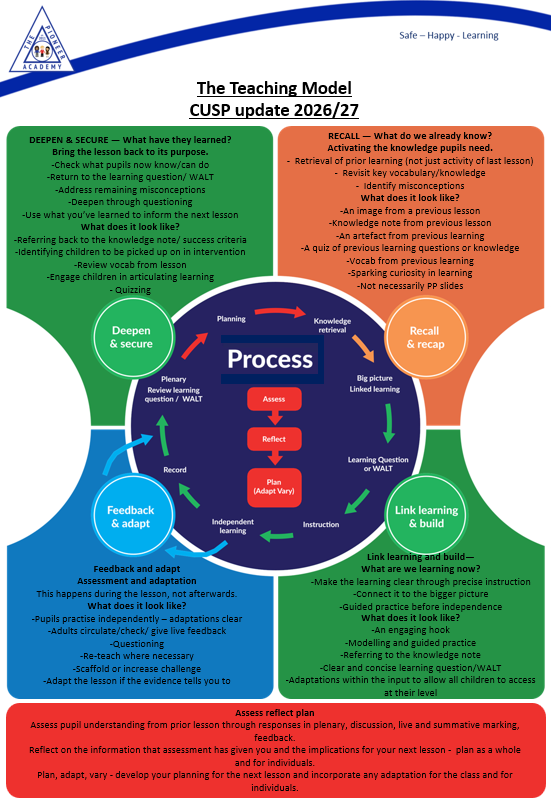
Uses Assessment for Learning (AfL) strategies effectively, adapting plans and altering lessons to meet the needs of pupils
Shares with pupils the success criteria
Uses and analyses’ data to ensure the needs of pupils are met
Children learn well in a range of well-planned settings, including paired learning, individual learning, whole class teaching and in small ability sets.